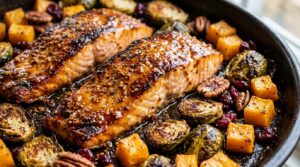

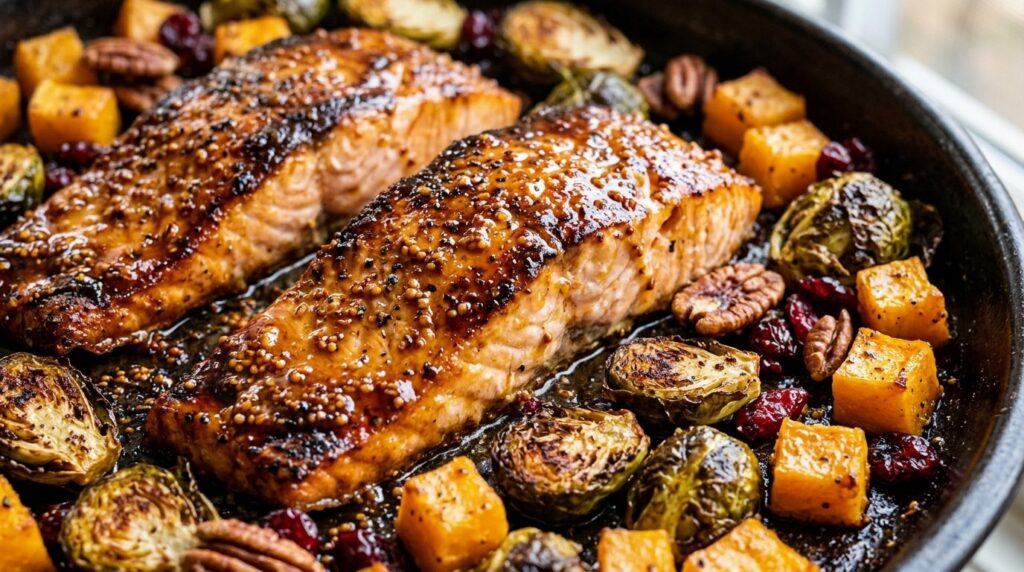
When you want a vibrant, omega-3-rich dinner that looks like an autumn magazine spread but takes just 25 minutes and a single baking sheet, this Maple Dijon Salmon and Crispy Brussels Sprouts Sheet Pan is unbeatable. Buttery, flaky salmon fillets are lacquered in a sticky maple-mustard-rosemary glaze and roasted alongside crispy charred Brussels sprouts and sweet golden butternut squash.
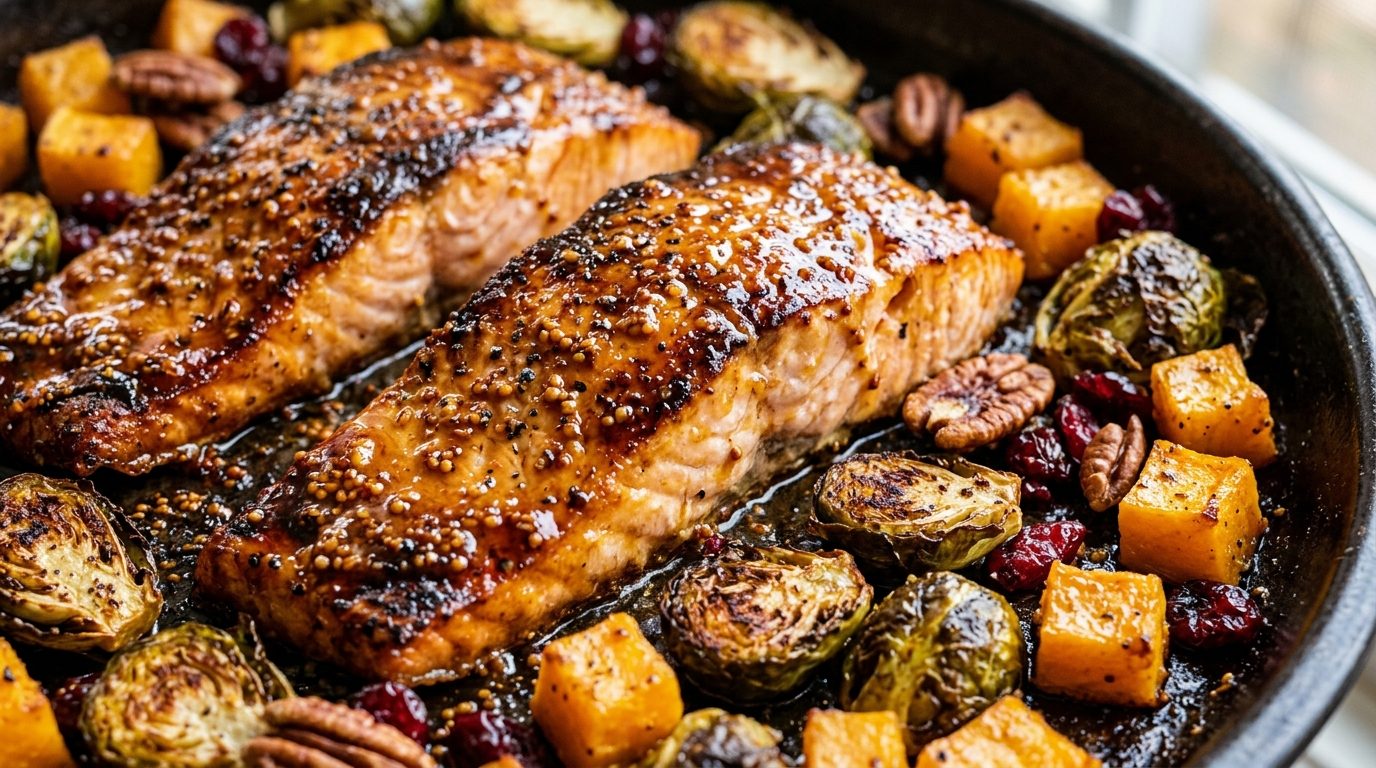
The secret to sheet pan salmon perfection is staggered timing: giving the halved Brussels sprouts and cubed butternut squash an 8-minute head start in a hot 425°F oven before adding the salmon fillets ensures the vegetables turn deeply caramelized while the salmon stays silky and medium-rare inside.
Why You’ll Love This Recipe
- Ready in 25 Minutes: Minimal chopping, 8 minutes of veggie pre-roasting, and 10 minutes with the glazed salmon.
- Sweet & Tangy Maple-Mustard Glaze: Pure dark maple syrup, smooth Dijon, whole-grain mustard, and fresh rosemary caramelize into a glossy crust.
- 38g Lean Protein & Heart-Healthy Omega-3s: Nutrient-dense, naturally gluten-free, and dairy-free.
- Single-Pan Cleanup: Everything roasts on one rimmed half-sheet pan for effortless weeknight cleanup.
Key Ingredients & Smart Swaps

- Center-Cut Salmon Fillets: Choose 4 even 6-ounce fillets of similar thickness so they finish cooking at the exact same moment.
- Fresh Brussels Sprouts & Butternut Squash: Halve the Brussels sprouts lengthwise and cut the squash into small 1/2-inch cubes so they roast quickly. Sweet potatoes also swap in seamlessly!
- Dual Mustard + Pure Maple Syrup: Combining smooth Dijon for sharpness with grainy mustard for texture balances the sweetness of real maple syrup.
- Toasted Pecans & Dried Cranberries: Scattered over the hot pan at the end for crunch and jewel-like tartness.
Step-by-Step Cooking Walkthrough
1. Pre-Roast the Veggies for 8 Minutes: Toss the halved Brussels sprouts and cubed butternut squash with olive oil, salt, and pepper on a bare metal sheet pan, placing the sprouts cut-side down. Roast at 425°F for 8 minutes.
2. Whisk the Maple Dijon Glaze: Whisk the maple syrup, Dijon and whole-grain mustards, apple cider vinegar, grated garlic, and rosemary until emulsified.

3. Add Salmon & Brush With Glaze: Push the hot veggies to the sides, nestle the salmon fillets in the center, and brush the glaze over the fish and vegetables.
4. Roast 10 Minutes & Garnish: Roast for 9–11 minutes until flaky and caramelized, then top with toasted pecans and dried cranberries.
3 Chef Secrets for Perfect Results
1. Roast Veggies Directly on Bare Metal (Not Parchment): If you want crispy, steakhouse-charred Brussels sprouts, skip the parchment paper under the veggies—direct contact with the hot metal sheet pan creates unbeatable caramelization.
2. Pat the Salmon Bone-Dry First: Blotting surface moisture from the salmon fillets with a paper towel ensures the sticky maple Dijon glaze clings tightly instead of sliding off.
3. Pull Salmon at 125°F–130°F: Just like our Crispy Honey Garlic Chicken Thighs & Sweet Potato Sheet Pan, watching internal temperature guarantees juicy protein every time.
What to Serve With Maple Dijon Sheet Pan Salmon

- Herbed Wild Rice or Quinoa: Serve the glazed salmon and veggies over nutty wild rice pilaf or garlic-herb couscous to soak up the pan juices.
- More 30-Minute Healthy Dinners: Love quick high-protein meals? Try our 30-Minute One-Pan Ground Turkey and Sweet Potato Taco Skillet next!
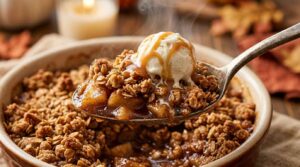
- Warm Autumn Dessert Pairing: Follow up this light, wholesome sheet pan meal with a warm scoop of our 30-Minute Skillet Brown Butter Caramel Apple Crisp.
Storage, Freezing & Reheating Instructions
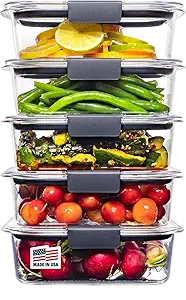
- Refrigeration: Store leftover salmon and roasted vegetables in an airtight glass container in the refrigerator for up to 3 days.
- Gentle Reheating: Reheat in a 325°F oven or air fryer for 4–5 minutes so the Brussels sprouts crisp back up without overcooking the salmon.
- Cold Salad Upgrade: Flake leftover cold maple-Dijon salmon over a bed of baby kale and arugula with apple slices for an incredible next-day lunch!
Ingredients
Equipment
Method
- Preheat your oven to 425°F (220°C) with the rack in the upper-middle position. On a large rimmed baking sheet, toss the halved Brussels sprouts and 1/2-inch cubed butternut squash with olive oil, salt, and black pepper. Arrange the Brussels sprouts cut-side down and roast for 8 minutes to get a head start.
- While the veggies pre-roast, whisk together the pure maple syrup, Dijon mustard, whole-grain mustard, apple cider vinegar, grated garlic, and fresh rosemary in a small bowl.
- Remove the sheet pan from the oven, push the veggies to the outer edges, and place the 4 salmon fillets skin-side down in the center. Brush two-thirds of the maple Dijon glaze generously over the salmon and drizzle the remaining glaze over the Brussels sprouts and squash.
- Return to the 425°F oven for 9–11 minutes until the salmon flakes easily with a fork (125°F–130°F internal temperature) and the edges of the Brussels sprouts are crispy and caramelized. Scatter toasted pecans and dried cranberries over the pan before serving.
Nutrition
Tried this recipe?
Let us know how it was!Frequently Asked Questions
Can I use frozen salmon fillets?
Yes! Just thaw the salmon completely in the refrigerator overnight and pat it thoroughly dry with paper towels before glazing and roasting.
Can I swap maple syrup for honey?
Absolutely! Honey works 1:1 in place of maple syrup for a classic Honey-Dijon salmon glaze.
Should I remove the skin from the salmon before baking?
Leave the skin on during roasting! The skin acts as an insulating barrier between the hot sheet pan and the delicate fish flesh, keeping the salmon extra moist—and once cooked, the fillet lifts right off the skin with a spatula.
Pin This Recipe for Later
Love this recipe? Save this pin to your Pinterest board so you have it ready whenever you need it!